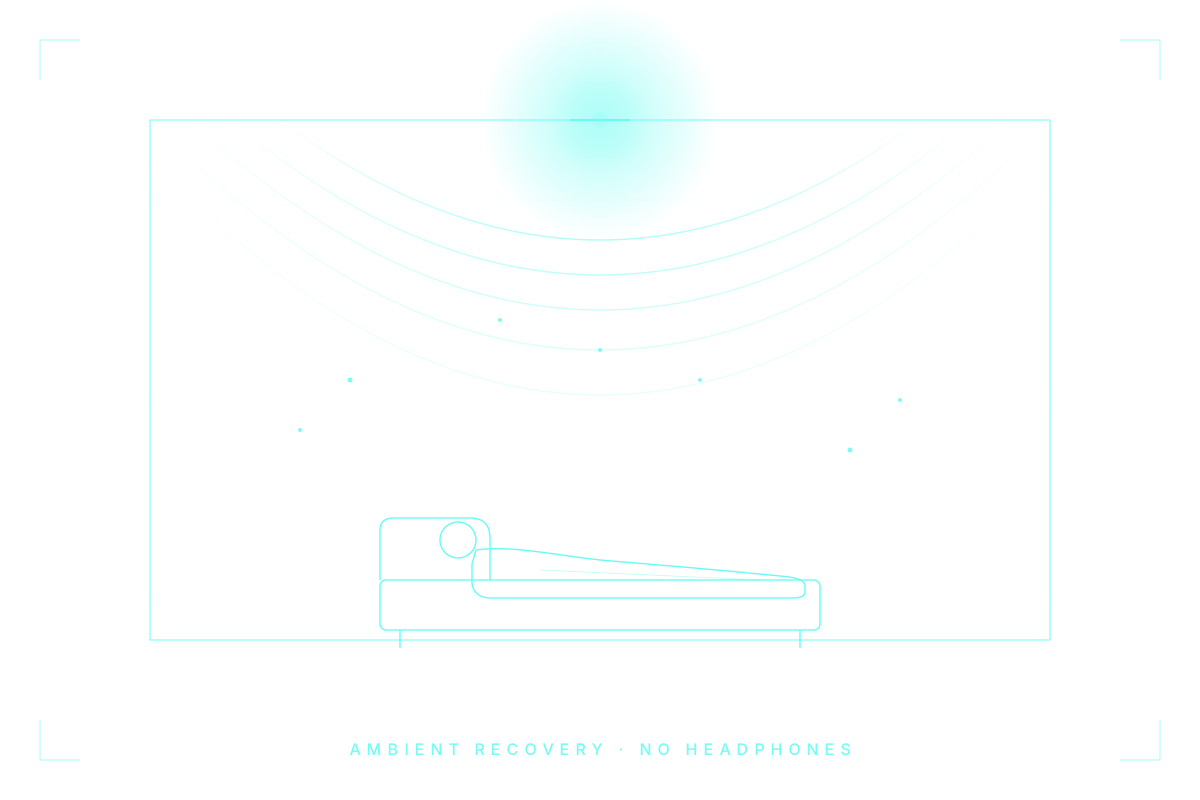
Unfamiliar hotel noises and time zone changes constantly pull guests out of deep rest. This challenge is well documented. In a study published by Brown University (https://www.brown.edu/news/2016-04-21/sleep), researchers found that when sleeping in a new environment, part of the brain can remain more vigilant, making it harder to achieve truly restorative sleep.
Unfamiliar hotel sounds, new environments, and time zone changes often disrupt deep sleep. In fact, research from Brown University found that when sleeping in a new environment, part of the brain can remain more alert, effectively keeping watch during the night. This phenomenon, known as the "first night effect," may contribute to lighter, less restorative sleep.
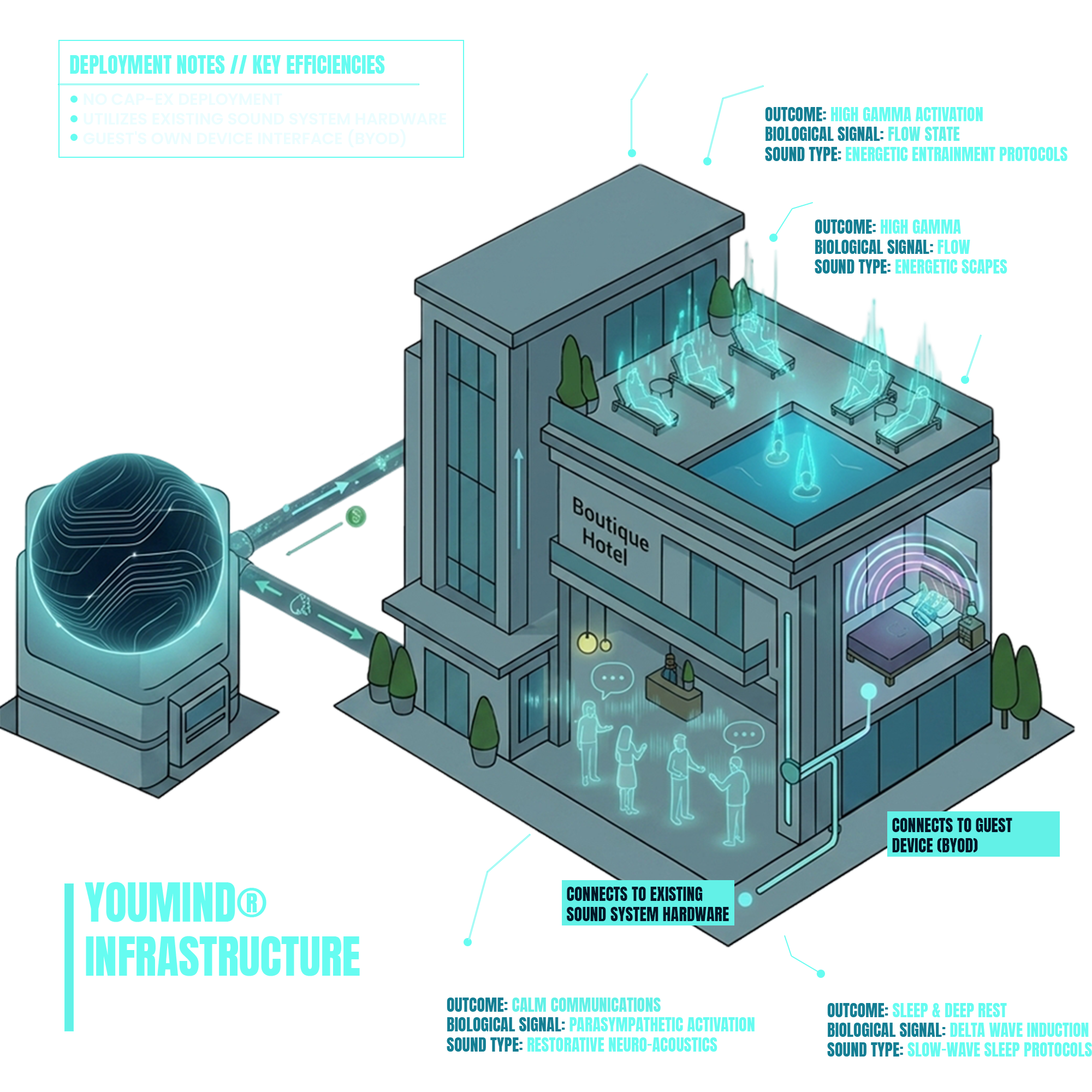
Traditional relaxation music may help guests unwind, but it does not actively target the brain mechanisms involved in sleep quality. Our neuroacoustic protocols are designed to support healthy sleep architecture by using carefully selected frequencies associated with sleep spindle activity. Sleep spindles play an important role in protecting sleep from external disturbances and supporting restorative rest. The goal is to help the brain become less reactive to environmental disruptions, allowing guests to experience deeper, more refreshing sleep and wake feeling genuinely restored.